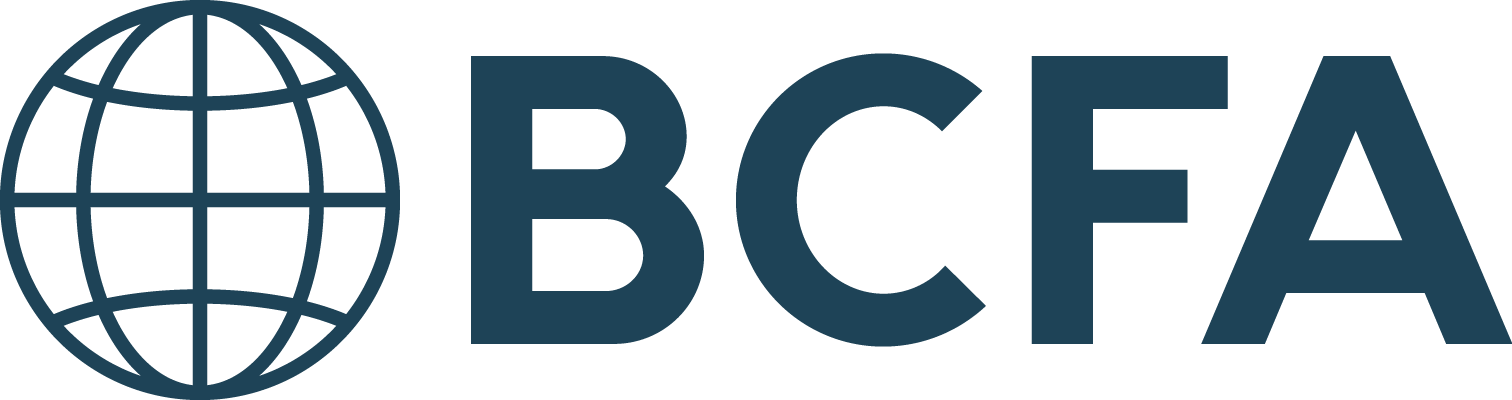
Emily Feng
Event information
Emily Feng
'Let Only Red Flowers Bloom': China's Crackdown on Free Speech
DATE: April 22, 2026 6:00 pm
LOCATION: St. Mary's Seminary & University and Zoom
China is an enormously important player in world affairs today and the biggest potential challenge to U.S. military power. But getting a sense of the country and its people is tough, because China has been largely closed to American journalists since 2020.
Reporter Emily Feng should know. She arrived in China in 2015, just out of college, and began reporting at the start of the repression for the Financial Times and later NPR. Expulsion of American reporters began in 2020. She delayed taking a vacation abroad for three years. At the end of 2022, she departed on break, and the gate had swung shut. She could not g back in. So she relocated to Taiwan to write her new book about her seven years in China,
Let Only Red Flowers Bloom is full of engaging, sometimes quirky portraits of people she met as she crisscrossed China during the crackdown. There’s the scooter thief from southern Guangxi province who preferred jail to work, whose defiance of social norms launched a cult of slackers. There’s a shocking story of a woman found in chains, a victim of China’s now abandoned one-child-per-family system; she’d been trafficked to Xuzhou, a city in eastern China, apparently to bear a child. And the bauxite tycoon reduced to poverty in Shaanxi province in central China. Feng picked up word of them and others from social media then traveled to meet them in person.
These aren’t random slices of life, but people who had a story to tell as they tried to buck the repression. Besides being entertaining, the stories in Red Flowers provide the ingredients for developing a theory on where China is going.
Emily continues to report China, Taiwan and beyond for NPR out of Washington. She was in eastern Turkey in late March, reporting on Iranians fleeing the war. A day later, she did a thoughtful overview of the U.S.-China relationship. It seems that each country thinks the other is in decline.
She will be our next guest speaker on April 22 at St. Mary’s Seminary. We’ll discuss her book, the future of U.S.-China relations, where she thinks China is heading and the world competition in semiconductors!
We plan to have copies for sale, but better yet, read it in advance and bring your copy for autographing. It’s available at Amazon hardcover and on Kindle.
Emily is a cum laude graduate of Duke University, where she earned a dual B.A. degree from the Sanford School in Asian and Middle Eastern studies and in public policy. She won the Daniel Schorr Journalism Prize and the Shorenstein Journalism Award.
Contact programs@bcfausa.org for more information or to register for this event. Attendance is free for BCFA members. Tickets are $10 for the guest of a member, $25 for non-members, and $10 for students.
Background
- March 26, 2026: “China’s Dominance in Humanoid Robots Opens Avenue for Deals,” Bloomberg
- March 25, 2026: “U.S. and China both believe the other is a declining power,” NPR
- March 25, 2026: “US-Iran conflict hands China’s Xi upper hand ahead of Trump meeting: Experts,” ABC News
- March 25, 2026: “Trump plans May visit to China for talks with Xi after Iran war delay,” Reuters
- March 25, 2026: “Trump’s Ambivalence on Taiwan Opens a Historic Opportunity for China,” The Wall Street Journal
- March 9, 2026: “As U.S. and Israel strike Iran, China’s foreign policy experts question Washington,” NPR
Share:
Questions about the program?
JOIN OUR MAILING LIST
Be the First to Hear about Upcoming Speakers
The Baltimore Council on Foreign Affairs is purely a local organization in programming, governance and support.
Quick Links
Get In Touch
© BCFA All Rights Reserved.