
Michael O’Hanlon
Event information
Michael O’Hanlon
Trump and the Western Hemisphere: Assertive Internationalism, but at What Cost?
DATE: February 2, 2026 6:00 pm
LOCATION: St. Mary's Seminary & University
The Trump administration raised a huge debate last month when it released a new National Security Strategy that declared restoring American “preeminence in the Western Hemisphere” to be a key U.S. objective. “We want other nations to see us as their partner of first choice, and we will (through various means) discourage their collaboration with others,” it said, dubbing this claim the Trump Corollary to the 1823 Monroe Doctrine.
Four weeks later President Trump ordered the snatch operation to remove Nikolás Maduro from power in Venezuela. And now the President is talking about taking over Greenland, a semi-autonomous territory of the Kingdom of Denmark. “If we don’t do it the easy way, we’re going to do it the hard way,” he says.
What’s unfolding isn’t isolationism but a highly assertive internationalism, expansionism in the pursuit of national power, says Michael O’Hanlon, a senior fellow at the Brookings Institution. It’s straight out of American history, but mostly from the 19th century. That judgment comes from O’Hanlon’s new book, which he will present to the Baltimore Council on Monday, Feb. 2, the next program in our Distinguished Speakers series. The book is titled To Dare Mighty Things: U.S. Defense Strategy since the Revolution. “It is a full-scale repudiation of 80 years of America’s approach to the world,” O’Hanlon says of the Trump Corollary to the Monroe Doctrine. He worries that a “simplistic pursuit of the national interest…can fail catastrophically” if it doesn’t account for the legitimate interests of other countries, he writes in the latest Foreign Affairs.
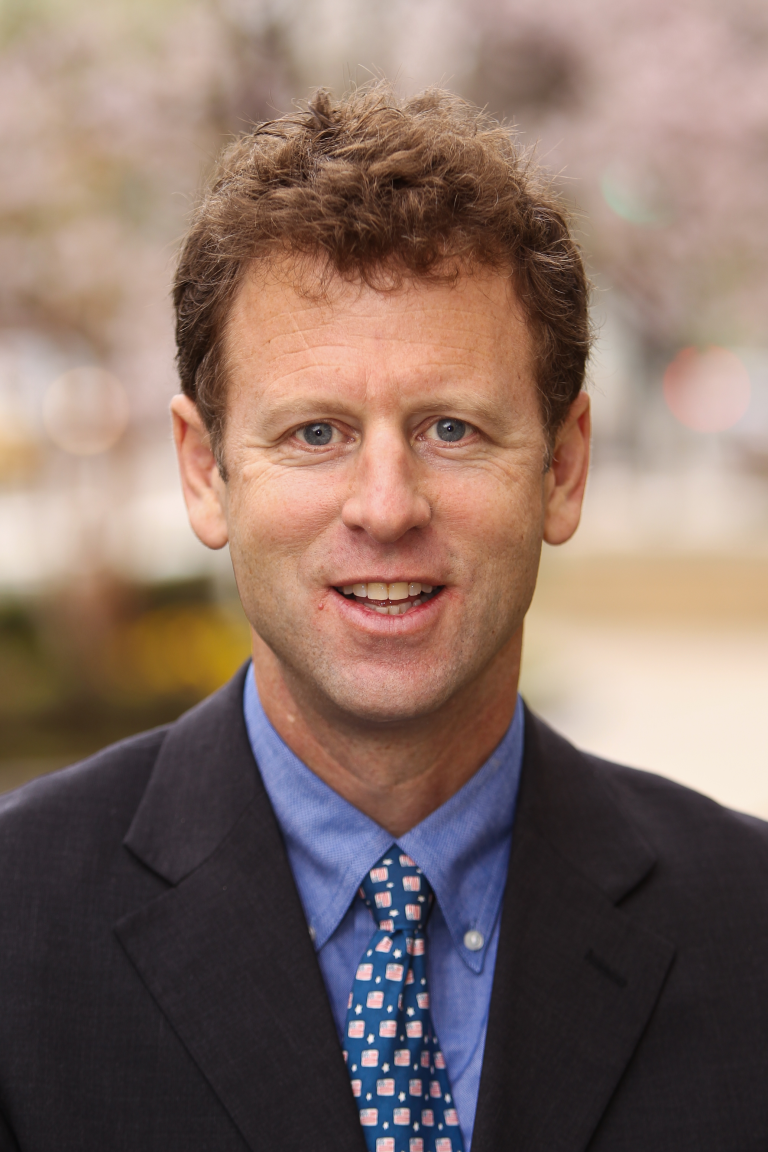
Michael O’Hanlon is a Senior Fellow and Director of Research in Foreign Policy at the Brookings Institution, where he specializes in U.S. defense strategy, the use of military force, and American national security policy. He co-directs the Security and Strategy Team, the Defense Industrial Base working group, and the Africa Security Initiative within the Foreign Policy program, as well. He holds the Philip H. Knight chair in Defense and Strategy. He is an adjunct professor at Columbia, Georgetown, and Syracuse universities, and a member of the International Institute for Strategic Studies. O’Hanlon was also a member of the External Advisory Board at the Central Intelligence Agency from 2011-2012. O’Hanlon’s latest books include: The Senkaku Paradox: Risking Great Power War over Limited Stakes (Brookings, 2019); Beyond NATO: A New Security Architecture for Eastern Europe (Brookings, 2017); The Future of Land Warfare (Brookings, 2015).
Please join us in person if you can, otherwise on Zoom, for what is sure to be a lively discussion. We’ll have copies of his book for sale and signing. The venue is St. Mary’s Seminary & University in Roland Park, where there’s free parking. Reception begins at. 5:15 pm, and the presentation at 6. Please come with your questions!
Contact programs@bcfausa.org for more information or to register for this event. Attendance is free for BCFA members. Tickets are $10 for the guest of a member, $25 for non-members, and $10 for students.
Background
- January 30, 2026: “Trump’s National Defense Strategy document breaks new ground,” The Hill
- January 29, 2026: “Situation Report,” Foreign Policy
- January 2026: “2026 National Defense Strategy,” U.S. Department of War
- January 14, 2026: “A look at the strategic importance of Greenland as Trump escalates threats,” PBS News
- January 13, 2026: “To Dare Mighty Things: U.S. Defense Strategy Since the Revolution,” Michael O’Hanlon
- January 6, 2026: “The Trump Corollary: How Gunboat Diplomacy Returned to the Americas,” Geopolitical Monitor
- January 5, 2026: “The Illusion of Isolationism: Why No One Should Have Expected Trump to Retreat,” Foreign Affairs
- January 5, 2026: “The Trump Corollary is officially in effect,” Atlantic Council
- November 2025: “National Security Strategy of the United States of America,” United States Government
Share:
Questions about the program?
JOIN OUR MAILING LIST
Be the First to Hear about Upcoming Speakers

The Baltimore Council on Foreign Affairs is purely a local organization in programming, governance and support.
Quick Links
Get In Touch
© BCFA All Rights Reserved.