
Mireya Solís
Event information
Mireya Solís
An Update: Japan’s Role in the Indo-Pacific
DATE: September 23, 2026 6:00 pm
LOCATION: St. Mary's Seminary & University and Zoom
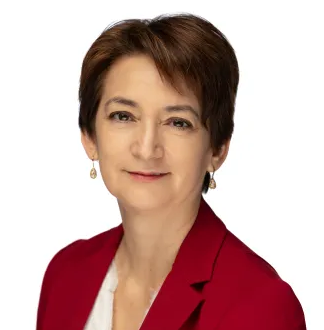
Mireya Solís is director of the Center for Asia Policy Studies, Philip Knight Chair in Japan Studies, and a senior fellow in the Foreign Policy program at Brookings. Prior to her arrival at Brookings, Solís was a tenured associate professor at American University’s School of International Service.
Solís is an expert on Japanese foreign economic policy, international trade policy, and U.S. economic statecraft in Asia. She is the author of “Dilemmas of a Trading Nation: Japan and the United States in the Evolving Asia-Pacific Order” (Brookings, Press, 2017), recipient of the 2018 Masayoshi Ohira Memorial Award. She also authored “Banking on Multinationals: Public Credit and the Export of Japanese Sunset Industries” (Stanford University Press, 2004) and co-edited “Cross-Regional Trade Agreements: Understanding Permeated Regionalism in East Asia” (Springer, 2008) and “Competitive Regionalism: FTA Diffusion in the Pacific Rim” (Palgrave Macmillan, 2009).
Her most recent book, “Japan’s Quiet Leadership: Reshaping the Indo-Pacific” (Brookings Press, September 2023)—now available in Japanese— addresses the question of why and how Japan has emerged from the “lost decades” unscathed from the populist wave and a far more consequential actor in the geopolitics of the Indo-Pacific and was named one of “The Best of Books 2024” by Foreign Affairs. The book provides a sweeping look at Japan’s domestic economic and political evolution, its economic statecraft, and the array of geopolitical challenges that have triggered a gradual but substantial shift in the country’s security profile. This deep dive into Japan’s trajectory over the last three decades underscores Japan’s hidden strengths in its democratic resilience, social stability, and proactive diplomacy; while reckoning with the profound challenges the nation faces: depopulation, rising inequality, voter disengagement, and threats to Asia’s long peace.
Solís has offered expert commentary to The New York Times, Financial Times, Washington Post, Los Angeles Times, Politico, The New Yorker, Nikkei, Kyodo News, Asahi Shimbun, Jiji Press, Japan Times, NHK World, Bloomberg, CNN, and BBC, among others. Solís earned a doctorate in government and a master’s in East Asian studies from Harvard University, and a bachelor’s in international relations from El Colegio de México.
Join BCFA for Join the presentation of “An Update: Japan and Indo-Pacific Security Issues” for an essential, insider look into how Tokyo is reshaping its defense posture, reinforcing its Free and Open Indo-Pacific vision, and navigating heightened regional tensions. You’ll gain direct access to expert analysis on key diplomatic challenges from cross-strait stability to global markets and regional security.
Background
- Mireya Solís, “Late-breaking shocks and shifting goalposts: Takaichi’s highwire Washington visit,” Order from Chaos, Brookings Institution, March 17, 2026.
- Mireya Solís and Saori Katada, “New Terms of U.S.–Japan Economic Security Cooperation: A Trump Reset?” Law & Geoeconomics 2, no. 1 (June 2026): 136-150. (The journal allows free access and the instructions to download the article are here: https://brill.com/fileasset/downloads_products/37952_LGEO4U_flyer.pdf.)
- Chinese Warships Are Cruising Too Close for Comfort Off Japan’s Shores
Share:
Questions about the program?
JOIN OUR MAILING LIST
Be the First to Hear about Upcoming Speakers

The Baltimore Council on Foreign Affairs is purely a local organization in programming, governance and support.
Quick Links
Get In Touch
© BCFA All Rights Reserved.