The US-Canada 'Rupture'
DATE: November 10, 2026 6:00 pm
LOCATION: Ungar Atheneum Goucher College
Until recently, America’s relations with Canada seemed as friendly as the common border is long — and it’s the longest land border on earth (5,525 miles).
Today, Canadian prime minister Mark Carney speaks of a “rupture” in relations.
Robert Zoellick, a former Deputy Secretary of State and World Bank President, says President Trump’s belittling of Canada is “cracking the foundation of U.S. global power… destroying a precious geopolitical asset: a strong continental base for projecting power.” How deep is the damage? Can it be repaired? How is Canada reacting?
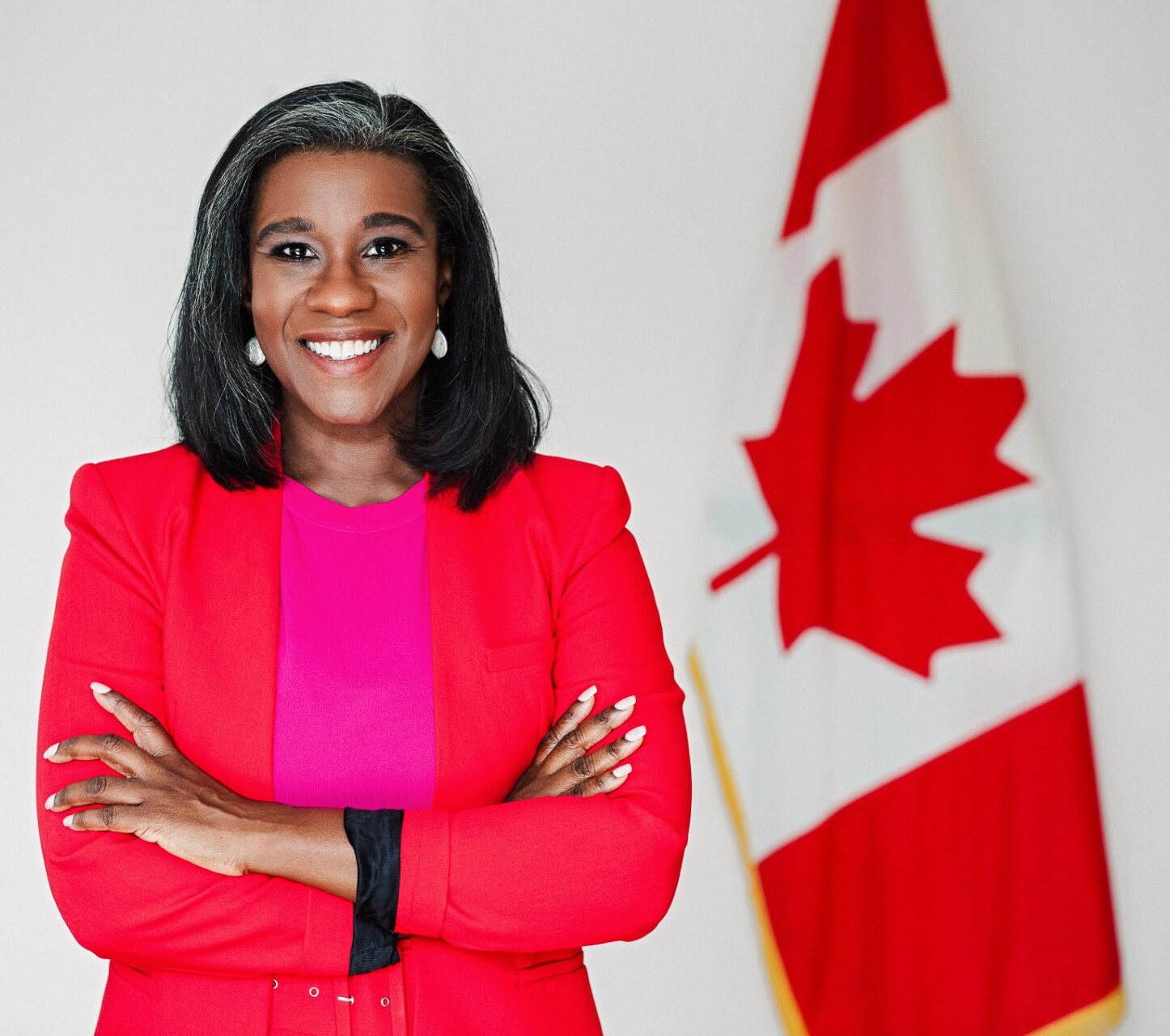
Prior to her appointment as Deputy Ambassador to the U.S., Nadia Theodore was Canada’s Ambassador and Permanent Representative to the World Trade Organization (WTO) and Head of Canada’s Permanent Mission in Geneva.
Other past post include Deputy Chief Negotiator of the Trans-Pacific Partnership negotiations, Director of Canada’s Secretariat for the Canada-European Union Comprehensive Economic and Trade Agreement and Chief of Staff to the Deputy Minister of International Trade. She held diplomatic assignments in Geneva and was Consul General of Canada in Atlanta, leading Canada’s engagement across the southeastern United States.
In addition to her public service experience, Ambassador Theodore was Senior Vice President at Maple Leaf Foods, where she brought private-sector leadership expertise in corporate strategy and global diversification.
Ambassador Theodore has bachelor’s and master’s degrees in Political Science from Carleton University and a Bachelor of Laws from the University of London.
Be the First to Hear about Upcoming Speakers
The Baltimore Council on Foreign Affairs is purely a local organization in programming, governance and support.
© BCFA All Rights Reserved.
Forced displacement represents one of the most pressing humanitarian issues of our time. Individuals and families, torn from the fabric of their communities, find themselves navigating a world of uncertainty, often without basic necessities or a clear path to safety. There are currently some 110 million forced displaced, and this number is growing by 10 million each year!
At the heart of this crisis are the political triggers. Armed conflicts, ethnic or religious persecutions, and systemic human rights abuses force millions to flee their homes in terror. Many are displaced within their own national boundaries, while others seek asylum abroad. If these factors change as a result of political shifts at home or the pressures from abroad, they can return to their homes. Forced displacement is thus different from environmentally driven displacement, as victims of climate change may never be able to return to their homes.
The ramifications of any sort of displacement are profound, not just for those directly affected, but also for host communities and countries. Overburdened infrastructures, socio-economic strains, and cultural tensions can arise, necessitating comprehensive strategies to foster harmony and integration. Yet the root causes of forced displacement can be remedied with a concerted focus by local players and international diplomacy.
Organizations like Refugees International play a crucial role in this arena, advocating for the rights and needs of the displaced, conducting on-the-ground assessments, and influencing policymakers to take informed actions. Their relentless work underscores the gravity of the situation and the urgency ofinternational cooperation. But they, too, are overwhelmed by the rapid expansion of the crisis.
International Humanitarian Law (IHL), with its core principles centered on the protection of civilians during conflicts, plays a pivotal role in this discourse. Yet, despite clear legal frameworks, compliance remains
inconsistent. This initiative emphasizes the importance of upholding and reinforcing these international standards.
It’s not just about recognizing the problem; it’s about active engagement. We urge governments, organizations, and individuals to prioritize the rights and needs of the forced displaced. Through collective efforts, informed policies, and sustained advocacy, we can shift the narrative from passive acknowledgment to proactive intervention.