
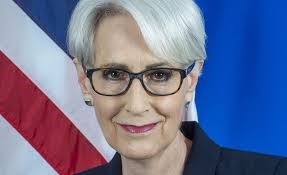
Ambassador Wendy R. Sherman
Event information
Ambassador Wendy R. Sherman
Transactional Diplomacy under the Trump Administration: Can It Work?
DATE: March 19, 2026 6:00 pm
LOCATION: The Center Club and Zoom
Ambassador Wendy Sherman will be our next distinguished guest speaker on March 19 at the Center Club at the Inner Harbor. She has served under three presidents and five Secretaries of State, and her last position was as Deputy Secretary of State in the Biden administration, the first woman to hold that post. She is best known as the chief U.S. negotiator at the Iran nuclear talks from 2013-2015, which resulted in the Joint Comprehensive Plan of Action, a non-binding agreement. President Donald Trump withdrew from it in 2018 but has been attempting to negotiate an accord of his own to prevent Iran from developing a nuclear weapon.
Ambassador Sherman is from Baltimore and grew up in Pikesville. After graduating from Smith College, she attended the University of Maryland School of Social Work for a Master’s Degree in Social Work — good preparation, she says, for negotiations. Drawing on her depth of experience in arms control and other negotiations the world over, she will give us her assessment of the major negotiations under the Trump Administration. We’ll do this as a moderated conversation.
Known for holding “hard conversations in hard places,” Wendy Sherman is not one to mince words. Negotiations on Gaza, Iran and Ukraine are currently being conducted by Jared Kushner and Steve Witcoff, businessmen who have neither been vetted nor confirmed by the Senate, she noted recently. “It is, in my view, insane to have these two do all of that at once,” she told CNN.
As Deputy Secretary, Ambassador Sherman was the Biden administration’s point person on China. While Counselor at the State Department, she led talks with North Korea and was engaged on Middle East negotiations. And she has overseen most other regions of the world in one or another of her posts. President Barack Obama awarded her the National Security Medal for her diplomatic accomplishments.
Prior to becoming Deputy Secretary of State, Ambassador Sherman was Director of the Center for Public Leadership at the Harvard Kennedy School, as well as a Senior Fellow at the School’s Belfer Center for Science and International Affairs and a professor of the practice of public leadership.
Contact programs@bcfausa.org for more information or to register for this event. Attendance is free for BCFA members. Tickets are $10 for the guest of a member, $25 for non-members, and $10 for students.
Share:
Questions about the program?
JOIN OUR MAILING LIST
Be the First to Hear about Upcoming Speakers

The Baltimore Council on Foreign Affairs is purely a local organization in programming, governance and support.
Quick Links
Get In Touch
© BCFA All Rights Reserved.