
Professor Robert Freedman
Event information
Professor Robert Freedman
War, the Israeli Elections and the Future of the Middle East
DATE: October 20, 2026 6:00 pm
LOCATION: Ungar Atheneum Goucher College & Zoom
Israel’s election on October 27 may be the most important since the founding of the state in 1948. Prime Minister Benjamin Netanyahu is fighting for his political life. Critics charge that he was poorly prepared for the Hamas attack of October 7,2023 that took 1200 lives and seized 251 hostages. He also must deal with the opposition of most Israelis to his support of draft exemptions for Israel’s ultra-Orthodox community at a time when Israel’s military forces are badly strained. Israel also faces increasing international isolation for its reprisal attacks on Gaza Palestinians, for the harassment of Palestinian communities on the West Bank by Israeli settlers and for the proliferation of Jewish settlements on the West Bank. The threat of Iran and its proxies still looms, and Israel appears to be seeking buffers on its borders to prevent future attacks. it now occupies more than 60% of Gaza, territory up to the Litany River in Lebanon and the border region of Syria.
Finally, the U.S.-Israel relationship is under question in the Democratic Party and to a lesser extent in the Republican Party, where President Trump has criticized Israel’s policy in Gaza, Lebanon and Syria.
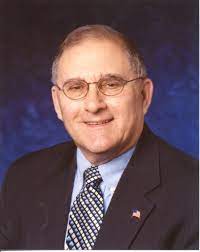
Prof. Robert Freedman is one of the leading U.S. authorities on Israel, the Middle East, and American foreign policy. He received his B.A. in Diplomatic History from the University of Pennsylvania and M.A. and Ph.D. degrees in International Relations from Columbia University. He has been an Assistant Professor of Russian History at the United States Military Academy, Associate Professor of Political Science and Russian at Marquette University and Professor of Political Science at the Baltimore Hebrew University, including a tenure as President of the institution. Currently, he is a Visiting Professor at Johns Hopkins University. He is the author or co-author of twenty books. He has been a commentator on National Public Radio, the BBC, and the Voice of America as well as other major American news outlets. He has advised policymakers in the State Department, the Central Intelligence Agency, the Israeli Defense Ministry and the Israeli Foreign Ministry. He has also served on U.S. government delegations to Moscow, Beijing, Uzbekistan, and Tunisia. Professor Freedman is well-known speaker at the Baltimore Council.
Join BCFA for a cutting-edge analysis of the key actors in the evolving conflict in the Middle East. Find several of Robert Freedman’s articles below, as well as some additional articles on these issues.
Contact programs@bcfausa.org for any questions or additional information.
Background
-
Books and Articles by our speaker, Robert Freedman:
Share:
Questions about the program?
JOIN OUR MAILING LIST
Be the First to Hear about Upcoming Speakers

The Baltimore Council on Foreign Affairs is purely a local organization in programming, governance and support.
Quick Links
Get In Touch
© BCFA All Rights Reserved.